
What Makes the Best Vitrectomy Hospital in Nagpur the Right Choice for Retina Treatment?
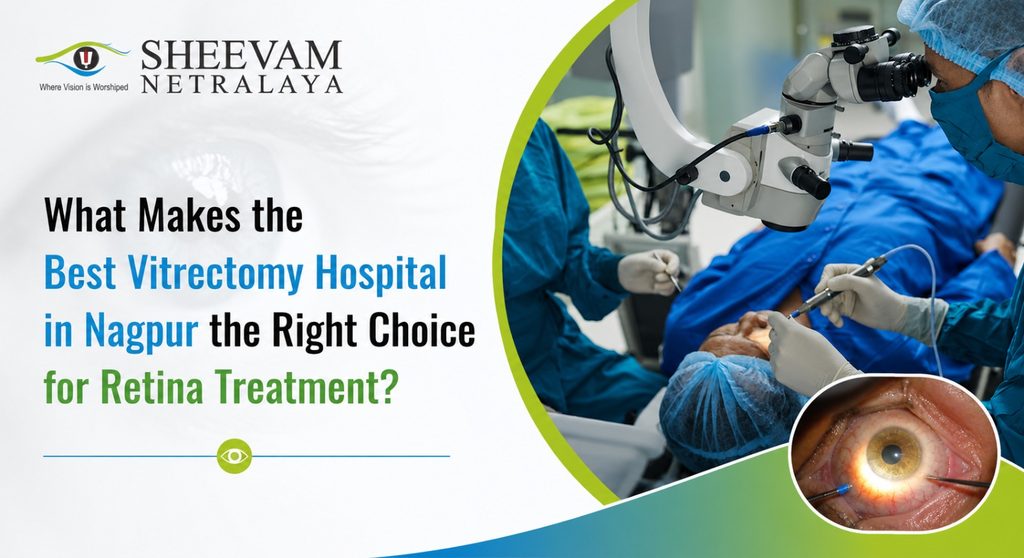
The retina, or the light-sensitive part of the eye, is one of the major eyesight components. If any illness affects this extremely delicate part of the eye, it sometimes will demand an extremely high level of medical care. Some of these illnesses retinal detachment, vitreous haemorrhage, diabetic retinopathy, macular holes or other vitreoretinal disorders often lead to surgical intervention, including vitrectomy.
If your doctor suggests this surgery, selecting among Nagpur’s Best Vitrectomy Surgery Hospital in Nagpur becomes a crucial choice. The excellent hospital should be more than just a surgical setting. It is also essential to have a skilled retina staff, high-tech diagnosis equipment, suitable surgical apparatus, extensive post-operative care, and the emergency support system to get maximum benefits from the coordinated treatment.
What Is Vitrectomy?
During a vitrectomy, a specialist retina surgeon performs a vitreoretinal operation and usually removes the liquid part (vitreous gel) in whole or in part from the inner side of the eye. In this way, the surgeon exposes the retina to work directly on some pathology affecting the back of your eye.
Vitrectomy can also be used in some cases for retinal detachment, vitreous haemorrhage, macular hole, macular surgery (macular pucker), retinal complications connected to diabetes, retinal infections, severe eye injuries, and some complications tied to cataract surgery.
Since the causes that might mean retinal problems may be very different from patient to patient, an individual treatment is the best approach and so the decision must be based on your doctor’s thorough and comprehensive evaluation carried out by a professional eye retina specialist.
Importance of hospital selection
Retinal surgery needs special skills as well as equipment that can only be found in certain hospitals. A hospital that does vitreoretinal surgery must have an integrated workflow that allows accurate diagnosis, decision making about surgery, safe surgery, and proper postoperative care.
If you are seeking the finest vitrectomy hospital in Nagpur, here are some pointers you can take into account when selecting the hospital.
1. Availability of an Expert Vitreoretinal Team
One factor that should be given the highest priority is the expertise of the surgical team.
A vitreoretinator is a medical specialist who has been trained and certified to diagnose and treat eye diseases involving the vitreous and retina. As different retinal conditions may require different surgical techniques, experience with a particular condition is essential to the success of the surgery.
Ask about:
- The training and credentials of the retina specialist
- vitreoretinal surgical experience
- His or her experience in dealing with your type of retinal disease
- The retina and surgical teams of the hospital
- The possibility of specialist consultation and aftercare
A hospital with a specialised retina service can deal more systematically with intricate retinal diseases.
2. Retinal Diagnostic Laboratories with State-of-the-Art Facilities
Retina treatment starts with a correct diagnosis which is the foundation for effective therapy.
The different diagnostic modalities at an integrated retina centre could include:
- Optical Coherence Tomography (OCT)
- Fundus photography
- Fundus fluorescein angiography
- B-scan ultrasonography
- Retinal micro-examination
- Other retinal imaging techniques
With these, the physician can assess the retina vitreous macula and any other connected pathology, enabling him to develop a treatment plan.
OCT, fundus photos, fundus fluorescence, ultrasound, and additional sophisticated retinal imaging are listed amongst other services of ophthalmology at AIIMS Nagpur, as an example.
3. A Dedicated Infrastructure for Vitreoretinal Surgery
Vitrectomy involves specialized surgical equipment, and at the same time it needs an appropriate operating environment.
Considering Best Vitrectomy Hospital in Nagpur, one should check if the facility has adequate vitreoretinal surgical resources such as:
- Vitrectomy systems up
- Operating microscopes of high quality
- Retinal wide-angle viewing systems
- Right surgical instruments
- Facilities for laser and other retinal treatments (if necessary)
- Good sterilisation and infection-control practice
A contemporary surgical setup enables the retina surgeon to manage various types of vitreoretinal pathology to suit patient requirements.
4. Management of various types of Retinal Diseases
The perfect retina center should be at least quite familiar with managing different kinds of medical and surgical retinal conditions.
Vitrectomy has an indication in some such cases:
- Retinal detachment
- Vitreous haemorrhage
- Diabetic retinopathy
- Macular holes
- Epiretinal membranes
- Vitreomaculartraction
- Various eye infections
- Retained lens fragments
- Dislocated intraocular lenses
- Serious injuries to the eye
A patient with vitrectomy is usually advised a treatment that best suits his/her diagnosis and eye health.
5. One Stop solution for Complete Retina Treatment
Sometimes a simple eye condition like a minor tear of blood vessel may not necessitate any surgery and retinal problems can often be effectively treated without invasive procedures.
Given the diagnosis, treatment could just be monitoring of the patient’s condition, administration of medication, intravitreal injections, laser procedures, or surgical intervention. A hospital having the complete range of retina facilities, can guide the treating doctors to recommend a suitable treatment for a patient, be it surgery or not, and not the other way around.
An example is AIIMS Nagpur’s eye care services that are not only limited to surgeries and operations, but also provide retinal exams, medical retina care, intravitreal injections, laser treatment services and treat a patient with retinal detachment, vitreous haemorrhage and diabetic retinopathy.
6. Emergency Retina Care – Critical Need
In fact, most retinal pathologies are non-emergent but a small subset definitely needs emergent treatment. When you see a sudden increase in floaters or flashes, or experience loss of peripheral vision, you must not just ignore these signs, as they might be symptoms of retinal disorders.
Choose a Good Vittectomly Hospital in Nagurp that can respond to an emergency case and has an ophthalmic emergency department with capability of retinal emergency evaluations. Timely investigations and treatments are often very important, more so when an acute retinal detachment or any other life threatening/ vision threatening disease are involved.
7. Post-Operational treatment and monitoring
Surgery is just one step in a long treatment journey. There is still a lot of work to be done even after the operation is finished.
After surgery, patients will attend regular follow-ups where the retina specialist can check various aspects of recovery like healing, eye pressure, retinal status, inflammation, and others. In some operations, doctors may also give patients precise instructions about eye drop use, activity limitations, post-op position, etc. which may need patients to strictly follow the medical advice.
Before a patient decides on a hospital, here are some questions that a patient might want to ask:
- How many follow-up appointments are needed and after what interval?
- Who will be the one responsible for monitoring the recovery and the progress?
- What should patients be cautious of or doing after surgery?
- When should a patient seek medical help?
- How is a patient supposed to reach the hospital in case there is an emergency?
A clearly organized and understandable follow-up program can assist the patient in anticipating what he or she will experience throughout the recovery phase.
8. Multidisciplinary Management
Retinal diseases might be very closely related with general health and body problems.
A case in point is that of diabetic retinopathy, which is a consequence of diabetes. Controlling blood glucose and overall health are key factors long-term eye care of a diabetic patient.
If the hospital has collaboration with other doctors and health care professionals, it may be easier to provide a complete and effective care programme for the patient who is needing different services from, for instance diabetologists physicians anaesthesia teams or even other experts.
9. Transparent Communication About the Procedure
Vitrectomy is the last resort for many retinal diseases. So, the ophthalmologist or retinal specialist would probably not suggest such a surgical procedure unless it is absolutely necessary. As patients are being referred for vitrectomy surgery, they should have ample chance to learn about their condition, its possible complications and the plan for their treatment.
You can expect that your retina specialist is able to
- Justify why vitrectomy surgery should be performed
- Inform you about alternative options if any exist
- Give you a detailed account of what the operation entailed
- Mention risks and complications that you could be facing
- Provide you with a realistic timeline for your healing process
- Tell you about potential surgeries that might have to be carried out at a later date
- Outline the measures you need to be taking following the operation
Sometimes it is difficult to remember everything your doctor explains so keep asking your doctor anything you do not understand during your consultation. Knowing your options can make a big difference for you and your family.
10. Financial aspects
Vitrectomy surgical procedures may differ in price according to a patient’s retina or eye disease, the type of retinal surgery technique and hospital services, etc.
Contact your retina surgeon before check in and get an approximate surgical fee. Ask your surgeon to make it clear, so that you may be able to distinguish between the expenses that are related to your surgery.
If you are insured, please confirm these items as well:
- The hospital where your retinal surgery will take place must be listed by your insurance company
- Whether or not it will be possible to have treatment at the hospital at your insurer’s expense
- Exactly which items are covered under your insurance plan
- Limitations and exclusions of the coverage
- Documents needed for the processing to proceed
- What Questions Should You Ask Before Choosing a Vitrectomy Hospital?
- Consider the questions below if you are comparing hospitals in Nagpur:
- Do you have a specialist in retina available to consult with the patient?
- On how much the surgeon experience for my specific disorder?
- Will the tests necessary for me to be determined be explained?
- Are vitreoretinal procedures done under separate surgical rooms or facilities?
- What variant of vitrectomy is the one your surgeon proposes to do?
- Will my surgeon offer me an option other than having a surgical operation?
- If any, what is the risk tied to the operations?
Being armed with answers to these types of questions allows one to really do a fair comparison of hospitals per what actually affects your treatment.
Deciding on a hospital merely based on the hospital’s technology or solely based on the doctor’s reputation is a flawed approach.
A truly excellent therapeutic setting is a combination of specialist expertise, suitable technology, and all-round patient care.
Contemporary diagnostic devices are of great assistance when spotting retinal pathologies whereas highly specialised surgical equipment enables a surgeon to carry out very delicate operations on vitreous and retina.
But, it is the availability of knowledgeable specialists who are able to interpret results and recommend suitable treatment that makes technology truly productive.
You get the Best Vitrectomy Hospital in Nagpur only when you look beyond the surface level.
Opt for a facility that offers:
- Vitretinal specialists who have lots of experience
- Thorough retinal diagnosis
- Innovative imaging facilities
- Vitretinal surgical setup that is fully-equipped
- Sufficient emergency care support
- Sustained support after surgery – complete post-op follow-up
- Open interaction with the patient
- Cost and insurance information that are completely clear
Above all, the decision depends on many factors including a patient’s eye condition, personal medical history, and the nature of treatment required.
Conclusion:
Vitrectomy is a relatively new surgery aimed at curing severe illnesses of both the vitreous gel and the retina. Since retinal surgery is highly complex and needs precise work with specialised techniques, a good hospital is definitely your priority with treatment.
The way to find the Best Vitrectomy Hospital in Nagpur isn’t through the online rankings or the promotional posters only. Take the time to assess retina experts, the diagnostics available there, surgical setup, emergency facilities, recovery care, and the way the hospital handles patients in total.
It you were asked for a vitrectomy, go to a retina doctor, find out your illness, and decide on a hospital that is capable to care for your eyes the specialist way.